
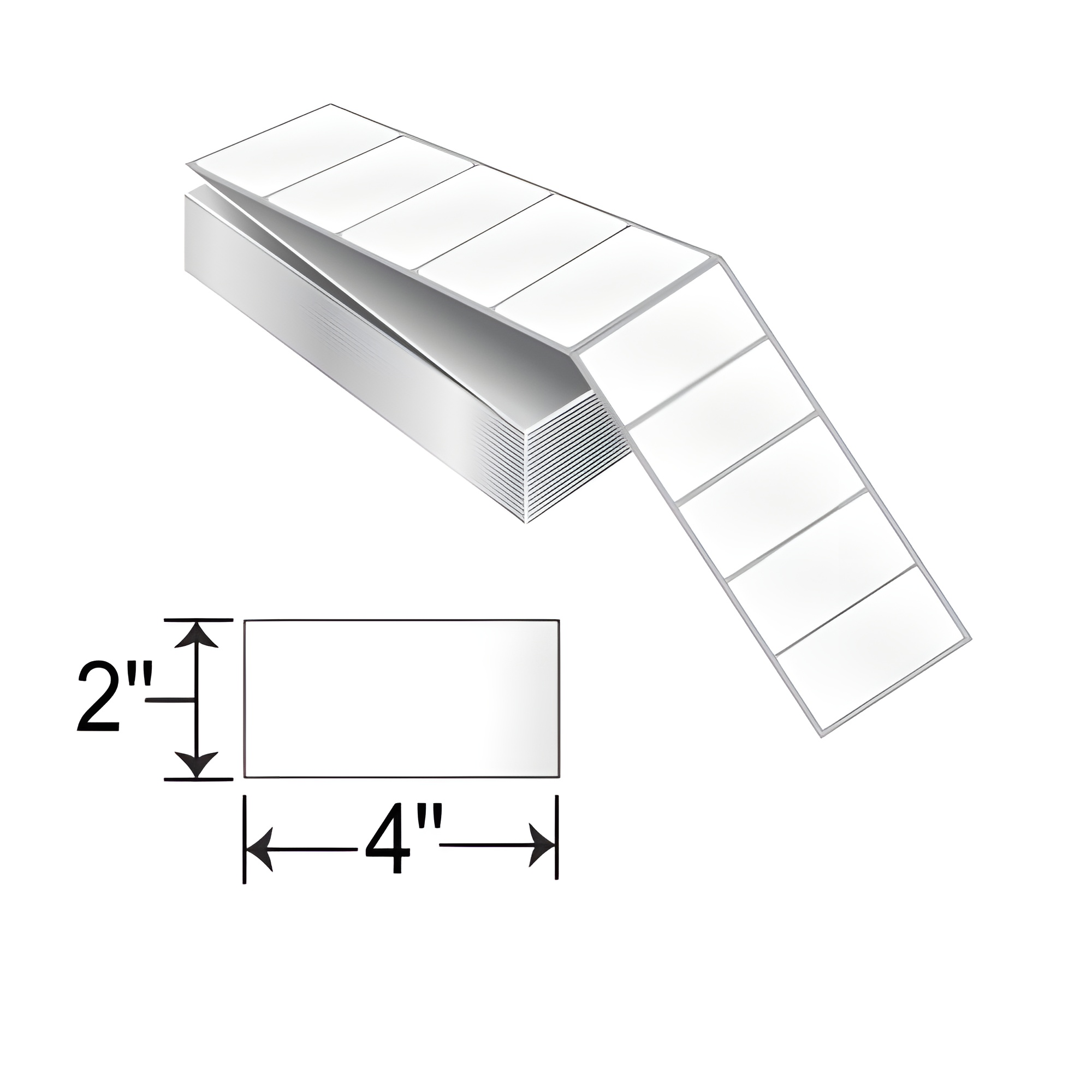

Description
Thermal Transfer Label
- 4" x 2" Thermal Transfer Labels, Perforated, Permanent Adhesive, Fanfold
| Label Size | 4 x 2 inch |
| Label Color | White |
| Carrier Width | 4 1/8" |
| Repeat | 2 1/8" |
| Material | Paper Labels |
| Format | Fanfold |
| Adhesive | Permanent |
| Perforation | Perforated |
| Labels Across | 1 Across |
| Labels Down | 1 Down |
| Labels Per Stack | 6,000 |
| Stacks Per Case | 2 |
| Sold By | Case |
| Case Weight | 23 lbs |
| Production Lead Time | 1-3 Business Days |
Thermal Transfer labels require thermal transfer ribbon for printing. Thermal transfer labels are built for long-lasting performance and is for for indoor and outdoor use. These labels are great for medium-term and long-term application as they are excellent at resisting fading, abrasion, and chemicals.
- Ideal for high volume use applications
- Utilizes thermal transfer ribbon
- Color printing—great for logo and product branding labels
- Print accuracy, precise edge definition—great for barcode printing
- Resistant to fading and smearing
- Durable & Versatile
- Can print on a variety of label materials
Primary Applications:
- Shipping & logistics: shipping labels, logistics labels, address labels
- Long term assets: equipment labels, machinery labels
- Inventory: warehouse inventory, freezer-grade labels, refrigerator labels, food labels
- Industrial & outdoor: labels needing to withstand heat, UV light or harsh chemicals
- Product ID & tracking: durable barcode labels and serialized labels on consumer packaged goods
- Healthcare: laboratory specimen labels
- Logistics & tracking: barcode labels, inventory tracking, pick and receiving labels
- High Resolution: extremely sharp, high-contrast black text or scannable barcodes that won't smudge
Thermal Transfer label printing method utilizes inks, toners, and a thermal transfer ribbon to print. Unlike direct thermal, this method does not require a specific kind of label material. Instead, the thermal transfer method is suitable for printing on a variety of label materials, including paper, polypropylene, polyester, etc.
In thermal transfer printing, the thermal print head applies heat to the ribbon to melt ink and resins onto the label’s surface. The thermal transfer ribbon results in a higher initial cost than direct thermal printing. However, since the thermal transfer ribbon melts onto the label to print, this method creates a longer lasting, more durable print image that can withstand temperature extremes, light exposure, and more. Finally, the thermal transfer ribbon yields precise print images with clear edges—great for barcodes!